Monday, February 12, 2024
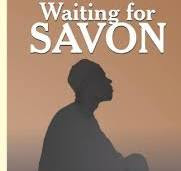
KEEP DECEIVING YOURSELVES THAT YOU ARE ONE (A REVIEW OF ISAAC ATTAH OGEZI'S WAITING FOR SAVON)
*BOOK REVIEW*
*KEEP DECEIVING YOURSELVES THAT YOU ARE ONE*
*Book title:* Waiting for Savon
*Author:* Isaac Attah Ogezi
*Publisher* Hybun Publications International, Lagos
*Year published:* 2009
*Pages:* 74
*Reviewer:* Adjekpagbon Blessed Mudiaga
"Waiting for Savon," is a hilarious but very insightful drama book written by lsaac Attah Ogezi, a professional lawyer. It is the fourth book l have reviewed so far, among five books l selected from the shelf of Ebedi International Writers Residency's library, to read and review, while also doing my ongoing creative writing project at the residency's First Edition of 2024. I have one more book left to read and review, to complete the five selected.
However, "Waiting for Savon" is a satirical playlet that dwells on the challenges Nigeria has been facing from the beginning of time, even though Nigeria is not mentioned in the text. The play is not structured in the usual traditional way of arranging dialogue and actions with 'Acts' and 'Scenes.' Instead, the dialogue and actions are segmented into prose titles such as; "First Movement: Wilderness," "Second Movement: Interregnum," and "Third Movement: Total Darkness," respectively.
Besides, any discerning reader will know that it is Nigeria's issues that the characters are discussing in the plot. Cannibaldom is the name metaphorically used by the dramaturgist to represent Nigeria.
The setting is an imaginary throne with a stool and some chairs within a space, where the three major characters; Mbati, Sarki and Ego start discussing about their expectations of an imaginary saviour known as "Savon." They are of the view that the expected saviour will deliver the impoverished folks of Cannibaldom from perpetual suffering.
Unfortunately, when the first self - made Savon appears, they are disappointed as he is a military dictator who farts and punishes them for his own farting. His name is General Alraf. He turns out to be a brute, but relinquishes power to a civilian administration, which he dubiously installs, through an election marred by gerrymandering
Nonetheless, it should be noted here that, the three central characters are the symbolical representatives of the three major tribes in Nigeria, otherwise called Cannibaldom by the playwright. Ego represent lgbo ethnic group, Sarki represent Hausa/Fulani group, while Mbati represent Yoruba ethnic group.
With very technical employment of humour and legal erudition at his disposal, the author dissects the legendary supremacy struggle between the trio tribes that have been responsible for the stagnancy of Cannibaldom for eons. This is clearly showcased when Ego becomes a victim of conspiracy by both Mbati and Sarki who timidly accuses him of farting, when they know full well that General Alraf is the culprit. Ego is also sidelined as a candidate without the right to contest for the throne of Cannibaldom, when General Alraf voluntarily hands over power to a civilian administration.
Mbati is trickily elected as the new occupier of the throne during an election clearly marred by rigging and violence. Ego's protests against the injustice being meted on him and his folks from the eastern region of Cannibaldom are swept under the carpet. Thereafter, Mbati starts showing his own devilish style of ruling. He looks down on Ego and Sarki, who are hitherto his balkanized co-sufferers. He claims to be the real expected Savon, but turns out to be worse than General Alraf in farting and looting of public funds. He instructs Zombie, a character that serves any occupier of the throne, to massage his tired legs. Zombie does so obediently as his name implies, to the joy of Mbati.
It is noteworthy to state here that Zombie could be a metaphorical representative of any of the security organisations guarding a sitting head of state or a civilian president in Cannibaldom.
From the foregoing, it can be said that the play has a linear-plot, which means it has no multiple sub-scenes, because all the actions and dialogue are happening in a particular space (throne) within intervals of time, divided into three topical segments aforesaid.
All the issues raised in the drama are still staring at Nigerians faces till date, even worse than before. There is no true saviour of the citizenry in sight. It has been tales of woes by the populace since the country gained independence from her colonial masters in 1960. A clique of hypocritical monsters in human form either in military or civilian administrations have been making the citizenry wake up from one nightmare to another, while the inept politicians keep blaming the military for usurping democratic power. The politicians are horrible than any military regime that had ever ruled Cannibaldom, seems to be one of the messages the playwright showcases in the drama. He also seems to advocate for the disintegration of Cannibaldom where there is no true sense of nationhood, as Ego is denied his right to leadership, which the election of Mbati exemplifies.
As the playlet speaks volume about what is still going on in Cannibaldom till date, I therefore highly recommend it for every Nigerian to read.
No psycholpgical / mechanical noise or typos are in the contents of the book. The diction is very simple to understand, coupled with a glossary of Igbo, Hausa and Yoruba words in it. The author and publisher deserves great commendations for that. However, as a point of correction for better visibility, the fonts used for the book's blurb are rather too tiny. There is the need to increase it to a bigger size as there is still space to accommodate such increase, by closing the too open gaps between the paragraphs, and apply indentation paragraphing style.
Isaac, the playwright, is also a literary essayist, poet and short story writer. He is published in Drumvoices Revue, USA (2006), Prosopisia Vol. 1 No 1 India (2008) and international anthologies. He is a fellow of LNPFA, Nollywood Script Writing and British Council Radiophonics Programme. He is a practicing lawyer.
-----------------------------------------------------------
*NOTE:* The author can be reached through this number: +2348035933577, while the reviewer can be reached via either WhatsApp: +2348059265333 or direct call: +2348067538922.
https://bulkybonnews.blogspot.com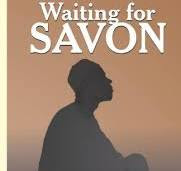

The Betrayal
by
Isaac Attah Ogezi
How could Akuna and Christy ever contemplate doing this to me? Is there nothing called responsibility in our quest to satisfy out unbridled desires? Oh, help me, Lord.
I was already a single mother when Akuna married me. Despite my challenges in giving birth for him, he was so supportive that when my daughter Christy came to live with us, he took her under his wings as though he were her biological father. After concluding her primary school education, he got her enrolled in a secondary school. By the time she was seventeen and in her final year at school, Christy had grown up into a slim beautiful girl. People said that she took after me in terms of my haunting beauty save for the slight, almost unobtrusive limp any time she walked, as a result of the abortion drugs I took in order to terminate the pregnancy. This naturally made her voluptuous hips twitch quiveringly, much to the luscious desires of men. One day when she walked past my husband and I, he pulled my head to his mouth and whispered: 'With those provocative hips, it won't be too long before you become a grandmother!' I pulled my head free from his grasp and said, 'Abeg, leave me!'
As the months rolled by, it appeared my husband's prophecy was at the verge of being fulfilled sooner than I had expected after she wrote her final school certificate exams. Graduation seemed to have given her the airs of a grownup to keep late nights. Sometimes while returning from work, Akuna would run into her in unthinkable places like Otukpo and bring her home in his vehicle. Igunmale was now becoming too small and rustic for her quixotic spirit. She continued with this new-found rebellious lifestyle until I noticed one day when she stayed indoors, knocked down by some ailment which she was secretly battling since I had ceased to be her confidante. She shrugged it off as malaria yet she continued to look pale by the day accentuated by frequent vomiting. I didn't want to imagine what my mind was suspecting. No, it could not be! She rebuffed my offer to take her to the hospital, but eventually decided to go by herself after I had pleaded with her to go for a medical checkup. She didn't return home until late in the night, brought home in Akuna's Mercedes Benz. What did the doctors said was the matter with her? Was it so serious that they had to send for my husband at the hospital? I pelted her with my barrage of questions.
'Pull yourself together, Ori,' Akuna said in a calm voice that instilled confidence that everything was under control. ‘It's nothing to be worried about.’ With that assurance, I held my peace, and went to bed, praying for the best.
The following day, Akuna as usual left home as early as four-thirty with his Mercedes Benz. He told me he was going to Otukpo and from there to wherever the business of the day lay. After checking up on Christy and was satisfied that she was fast recuperating from whatever ailment that was troubling her, I left for the market to buy some ingredients for the okoho soup that I wanted to prepare much later in the day. You could imagine my shock when I returned home and discovered Christy wasn't at home. Where could she have gone in her condition? I was deeply disturbed. Immediately I dropped the soup ingredients I bought at the market and set out to look for her. I went to the houses of close friends and relatives, who all pleaded ignorant of her whereabouts. When I returned home, I went to her room again and I stumbled at the possible clue to her mysterious disappearance. Her big bag which normally contained most of her clothes was missing. Obviously, she must have travelled out of town but never deemed it fit to tell her beloved mother. But where could she have travelled to? I was confused and at the same time bewildered at the turn of events in my motherhood. When had I lost my daughter whose conception nearly cost me my education? Where had I shirked in my responsibility to her as a mother? The day broke, but Christy didn't come home. My husband too on whose shoulders I would often lean on to ventilate my pent-up emotions, didn't return home that night owing to the nature of his job.
One day dragged into another and then to the next, but there was no Christy nor my husband. On the third day's evening, while lying on the bed, the familiar sound of Akuna's Mercedes Benz brought me to my feet as it screeched to a halt in front of our house. I raced happily outside to meet him. Akuna gingerly alighted, while on the front seat was a pensive Christy visibly battling with herself whether to disembark from the car. Reluctantly, she opened the side door and came out. They were both attired in their best clothes, as though returning home from a wedding reception.
I rushed to Akuna's arms in welcome but I tried not to be excited about Christy's return because of the unfair treatment she had been treating me lately. Together we made for the house. While I was in fever-excitement for seeing my husband and the return of my prodigal daughter, there was this sombre - or should I say funereal? - air about them that censored my jubilation. Was anybody dead?
'Will you please sit down, Ori?' said Akuna. It was more like a bark. I quietly dropped unto the nearest seat, crestfallen. This is not the man that I had married, I said to myself.
An electrifying hush fell over the room. When I tried to lock my eyes with Christy's to perhaps get a clue of what was afoot, she averted my gaze. Instinctively I knew that I was the outsider in this home. The suspense was simply killing me, and just when I was about to cry out in frustration, Akuna started to talk.
'We're just returning from Otukpa,' he'd begun. Yes, and so what about it? I said to myself.
'We had gone there to see the people of Christy's father.'
'About what?' I asked with feigned equanimity.
He stammered uncertainly for a while, and when he was able to pull himself together, he rambled on about the stigma of giving birth unmarried as a woman and all whatnots.
'Pray, what has that got to do with your going to Otukpa with my daughter to see Adeka's people?' I interrupted, unable to gird my emotions.
'We were not sure you would give us your blessing...,' he added in confused, singsong manner when he saw the alarmed expression on my face. I was visibly turning white, mortified beyond words. The rest of what he was saying came to me trance-like as though from a great distance. Not in my wildest imagination did I believe that Akuna and my daughter could be having an affair behind my back let alone come to me after meeting with her father's people and had performed the traditional rites. I was in a state of inertia, horrified at this abomination wrought by the two people most dear to me on earth and wished God could just spare me further from witnessing this horror by striking me dead instantly.
As though from a blurred vision. I saw Christy saying something about my share. Yes, after they had fulfiled the demands of her father's people, they had now come to meet me with my share, the maternal share of the rite with the ultimatum from my daughter, 'You can either choose to accept your share of the rite as my mother or come in as my co-wife!'
'You … you … Christy...?' I'd stuttered, pointing an accusing finger at her, but anger against such unspeakable betrayal choked the words back in my throat.
What a blight on motherhood! I'm still surprised how I comported myself without exploding on that accursed day. I played the coward and decided right there and then to let them be and packed out of my matrimonial home for my daughter to take over without taking any court action as some people later advised me.
Not more than a week later, the clouds of discontent brewing over our skies in our country burst into a full-scale civil war. I remember Igunmale and our village Agila and all other border Idoma towns with southeastern Nigeria suffered the earliest casualties of the war, bombarded day and night by airstrikes from both the federal and Biafran forces. We all fled on foot for our dear lives to Otukpo.
It's now over two decades that that the war had ended and I’m yet to set eyes on either of them nor heard about what befell them or their whereabouts. Did they too survive the war?
It was tough but I survived.
Tuesday, January 30, 2024
ACHEBE'S DIARY
BY ISAAC ATTAH OGEZI
Achebe's Diary" invites readers on a profound exploration of Nigerian culture through a collection of thought-provoking short stories by the esteemed author Isaac Attah Ogezi. This literary journey provides a nuanced look into the heart of Nigeria, capturing its cultural richness, historical intricacies, and diverse traditions.
Renowned for his insightful storytelling, the author skillfully weaves tales that range from somber reflections on Nigeria's challenges to joyous celebrations of its moments of warmth. The stories within "Achebe's Diary" collectively form a mosaic that authentically portrays the multifaceted nature of life in Nigeria.
While some narratives delve into the shadows that mark Nigeria's history, others radiate with the vibrancy of its cultural tapestry. Ogezi navigates the spectrum of human experiences, offering readers a glimpse into the resilience and complexity that define Nigeria.
It's essential to note that "Achebe's Diary" is intended for a mature audience, as it incorporates instances of violence and sexual material. These elements, thoughtfully integrated by the author, add depth to the narratives, urging readers to confront the realities and intricacies of the human condition.
In essence, "Achebe's Diary" serves as a literary mirror reflecting the diversity, resilience, and depth of Nigerian culture. Ogezi's storytelling prowess elevates each short story, creating a compelling and concise exploration that encourages mature readers to engage with, question, and appreciate the intricate layers of the Nigerian experience.
Copyright and Content Warning
It's essential to note that "Achebe's Diary" is intended for a mature audience, as it incorporates instances of violence and sexual material. These elements, thoughtfully integrated by the author, add depth to the narratives, urging readers to confront the realities and intricacies of the human condition.
Copyright Disclaimer:
All rights reserved. No part of this book may be reproduced, stored, or transmitted in any form or by any means, electronic, mechanical, photocopying, recording, scanning, or otherwise, except as permitted under Section 107 or 108 of the 1976 United States Copyright Act, without the prior written permission of the publisher, CrossCultura Publishing LLC.
This book is a work of fiction. Names, characters, places, and incidents are the product of the author's imagination or are used fictitiously. Any resemblance to actual events, locales, or persons, living or dead, is coincidental.
For information regarding permissions, requests, or any other inquiries, please contact CrossCultura Publishing LLC at info@crossculturabooks.com.
Copies available at:
https://www.crossculturabooks.com/product-page/achebe-s-diary-by-isaac-attah-otezi?fbclid=IwAR2vuZjx1P3RE09baOV6kmAl9LynQlUIGK_UAwLLht8MlWiusrlNCt70LyY
https://www.amazon.in/Achebes-Diary-Isaac-Attah-Otezi-ebook/dp/B0CNHY42NZ
https://www.amazon.co.jp/Achebes-Diary-English-Isaac-Attah-ebook/dp/B0CNHY42NZ
https://www.goodreads.com/book/show/202323064-achebe-s-diary

Friday, June 30, 2023
REMEMBERING OLA ROTIMI (1938 - 2000)
By
 Isaac Attah Ogezi
Death can only make its vain boast, for though his bones are interred, the Storyteller lives on. This aphorism cannot be truer than in the case of the Nigerian playwright, Prof. Ola Rotimi. I studied his play, Ovonramwen Nogbaisi, as one of the recommended texts for the Senior School Certificate Examinations conducted by the West African Examinations Council (WAEC) in the mid-1990s and could not help but salute the intrepidity of the deposed Oba of the Benin Empire sent on exile to Calabar by the British colonial misadventurists. But Rotimi seemed not yet done with me, for the next year when I enrolled for my Interim Joint Matriculation Board Examinations (IJMBE) with the then School of Preliminary Studies (SPS), Keffi, Nasarawa State, the playwright was there waiting for me, not in person, anyway. His unarguably foremost play, The gods are not to Blame, was on the reading list of IJMBE! Here I met the great character Odewale whose tragic hubris led him inexorably to fulfil the gods' decree of killing his father and marrying his mother. An adaptation of Sophocles' Oedipus Rex that completely transplanted the work to Africa as though it sprouted originally from there. With these encounters with the playwright vicariously through his two great plays, you could imagine my excitement when I was told by members of the Association of Nigerian Authors (ANA) Plateau State chapter that Ola Rotimi was to grace the association's annual international convention as the Keynote Speaker! I had to see this playwright live at the convention, I vowed to myself. The D-day dawned in the year 1999, and there I was among the entranced largely writers' audience, after trekking from Abuja Hostel of the University of Jos, Jos, Plateau State, along Bauchi Road to Tati Hotel Jos. There I saw the larger than life, diminutive writer who had influenced my life without previously meeting him face to face. There I sat, drinking from the rich keynote speech of one of most influential writers in my life.
It was with a blood-curdled heart that I received the shocking news of his death a few months later. Though Rotimi is dead, his works live on. Wole Soyinka is the most celebrated Nigerian writer and playwright, but perhaps the most popular play to Nigerian readers and audiences, both literary enthusiasts and non-literary enthusiasts., is Rotimi's The gods are not to Blame. In the hands of Rotimi, the golden past of African culture is brought alive, sizzling, spiced with grand, proverb-laden speeches, choral singing and dancing. It is total drama, unmatched anywhere in the world. He is to Nigerian theatre what Chinua Achebe is to Nigerian fiction especially those set in the past. His Kurunmi is not so satisfying a play to the present writer in terms of the great traditional speeches of The gods are not to Blame and Ovonramwen Nogbaisi, but these failings appeared ameliorated in the pacy plot, action and movements on the stage. The comic side of him is evident in the timeless and riveting comedy, Our Husband Has Gone Mad Again. He was to try his hands in theatre of the absurd with Holding Talks and Man Talk, Woman Talk, the latter published posthumously. After over two decades of his passing on to glory, the impact of his writing remains undiminished, and perhaps unsurpassed by playwrights in successive generations. Femi Osofisan may be a worthy successor, prodigiously prolific and versatile, but apart from Women of Owu, has not methinks produced a work of great traditional grandeur as Rotimi's The gods are not to Blame and Ovonramwen Nogbaisi. The multiculturalist playwright, Ahmed Yerima, is also another playwright that makes great strides in drama of the past in Nigerian theatre today traversing different ethnic cultures in Nigeria - in the North, specifically the Hausa-Fulani, we have Attahiru, in the Niger Delta, we have Hard Ground and Little Drops…, to mention but the most prominent. Like Soyinka, Yerima is at home with both the rustic past of our forebears as well as the cosmopolitan life unparalleled. However, where Soyinka remains unmatched in drama is his ability to be at home with both tragedies, for example his greatest tragic play, Death and the King's Horseman as well as satirical plays or comedies like the Jero Plays, A Play of Giants, The Lion and the Jewel, amongst several others.
Despite the rich harvest of works by Osofisan, Yerima, Olu Obafemi, Zulu Sofola, Zainabu Jallo, Jude Idada, Friday John Abba, and a host of other twinkling stars on our literary firmament, Rotimi's lean harvest of plays sets the benchmark for the best of our theatre. It is a good thing to be prolific, if you can, but remember that a writer can make himself immortal with a handful of classics like Rotimi. I would rather be the soldier bee that packs its venom into one single sting and dies later, albeit leaving in its wake a writhing victim by the impact of one single sting of death, than be a writer of a hundred books without a single immortal or great work. Time cannot obliterate the impact of Rotimi's contributions to our theatre and the unborn generations to come.
Isaac Attah Ogezi
Death can only make its vain boast, for though his bones are interred, the Storyteller lives on. This aphorism cannot be truer than in the case of the Nigerian playwright, Prof. Ola Rotimi. I studied his play, Ovonramwen Nogbaisi, as one of the recommended texts for the Senior School Certificate Examinations conducted by the West African Examinations Council (WAEC) in the mid-1990s and could not help but salute the intrepidity of the deposed Oba of the Benin Empire sent on exile to Calabar by the British colonial misadventurists. But Rotimi seemed not yet done with me, for the next year when I enrolled for my Interim Joint Matriculation Board Examinations (IJMBE) with the then School of Preliminary Studies (SPS), Keffi, Nasarawa State, the playwright was there waiting for me, not in person, anyway. His unarguably foremost play, The gods are not to Blame, was on the reading list of IJMBE! Here I met the great character Odewale whose tragic hubris led him inexorably to fulfil the gods' decree of killing his father and marrying his mother. An adaptation of Sophocles' Oedipus Rex that completely transplanted the work to Africa as though it sprouted originally from there. With these encounters with the playwright vicariously through his two great plays, you could imagine my excitement when I was told by members of the Association of Nigerian Authors (ANA) Plateau State chapter that Ola Rotimi was to grace the association's annual international convention as the Keynote Speaker! I had to see this playwright live at the convention, I vowed to myself. The D-day dawned in the year 1999, and there I was among the entranced largely writers' audience, after trekking from Abuja Hostel of the University of Jos, Jos, Plateau State, along Bauchi Road to Tati Hotel Jos. There I saw the larger than life, diminutive writer who had influenced my life without previously meeting him face to face. There I sat, drinking from the rich keynote speech of one of most influential writers in my life.
It was with a blood-curdled heart that I received the shocking news of his death a few months later. Though Rotimi is dead, his works live on. Wole Soyinka is the most celebrated Nigerian writer and playwright, but perhaps the most popular play to Nigerian readers and audiences, both literary enthusiasts and non-literary enthusiasts., is Rotimi's The gods are not to Blame. In the hands of Rotimi, the golden past of African culture is brought alive, sizzling, spiced with grand, proverb-laden speeches, choral singing and dancing. It is total drama, unmatched anywhere in the world. He is to Nigerian theatre what Chinua Achebe is to Nigerian fiction especially those set in the past. His Kurunmi is not so satisfying a play to the present writer in terms of the great traditional speeches of The gods are not to Blame and Ovonramwen Nogbaisi, but these failings appeared ameliorated in the pacy plot, action and movements on the stage. The comic side of him is evident in the timeless and riveting comedy, Our Husband Has Gone Mad Again. He was to try his hands in theatre of the absurd with Holding Talks and Man Talk, Woman Talk, the latter published posthumously. After over two decades of his passing on to glory, the impact of his writing remains undiminished, and perhaps unsurpassed by playwrights in successive generations. Femi Osofisan may be a worthy successor, prodigiously prolific and versatile, but apart from Women of Owu, has not methinks produced a work of great traditional grandeur as Rotimi's The gods are not to Blame and Ovonramwen Nogbaisi. The multiculturalist playwright, Ahmed Yerima, is also another playwright that makes great strides in drama of the past in Nigerian theatre today traversing different ethnic cultures in Nigeria - in the North, specifically the Hausa-Fulani, we have Attahiru, in the Niger Delta, we have Hard Ground and Little Drops…, to mention but the most prominent. Like Soyinka, Yerima is at home with both the rustic past of our forebears as well as the cosmopolitan life unparalleled. However, where Soyinka remains unmatched in drama is his ability to be at home with both tragedies, for example his greatest tragic play, Death and the King's Horseman as well as satirical plays or comedies like the Jero Plays, A Play of Giants, The Lion and the Jewel, amongst several others.
Despite the rich harvest of works by Osofisan, Yerima, Olu Obafemi, Zulu Sofola, Zainabu Jallo, Jude Idada, Friday John Abba, and a host of other twinkling stars on our literary firmament, Rotimi's lean harvest of plays sets the benchmark for the best of our theatre. It is a good thing to be prolific, if you can, but remember that a writer can make himself immortal with a handful of classics like Rotimi. I would rather be the soldier bee that packs its venom into one single sting and dies later, albeit leaving in its wake a writhing victim by the impact of one single sting of death, than be a writer of a hundred books without a single immortal or great work. Time cannot obliterate the impact of Rotimi's contributions to our theatre and the unborn generations to come.

Thursday, June 29, 2023

Monday, June 5, 2023
DANCING TIME OVER FOR GOV. REV. FR. HYACINTH ALIA

Thursday, April 6, 2023

Subscribe to:
Posts (Atom)